
The Most Trustworthy Thing an Interpreter Can Say Is: I Am Not the Right Interpreter for This
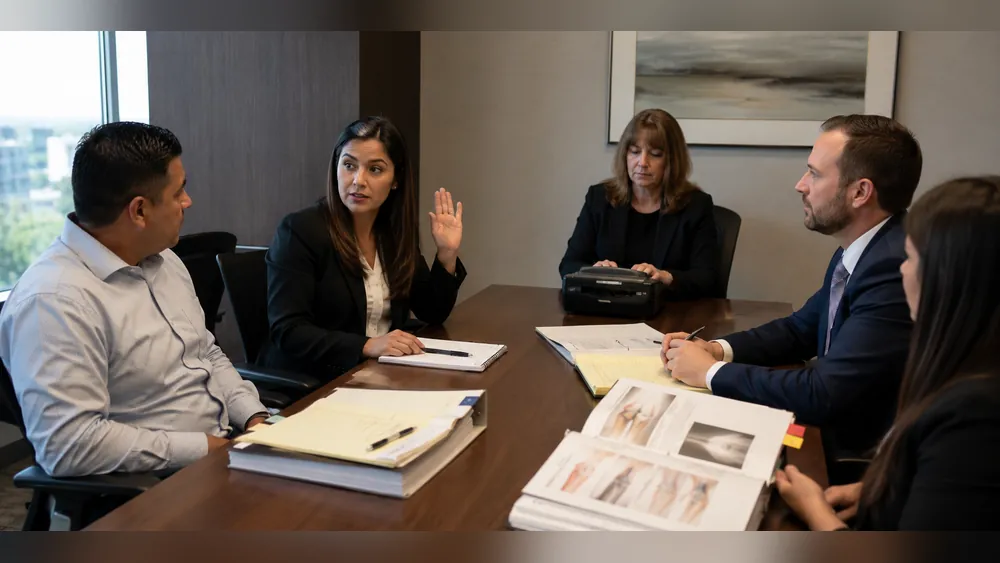
A deposition is set for nine on a Thursday. The agency confirms a Spanish interpreter. Twenty minutes into the witness’s testimony, the interpreter realizes the case turns on orthopedic surgical terms she has never worked with in either language. She can push through and hope context carries her, or she can stop, tell the room she is not the right interpreter for this matter, and ask that a better-prepared interpreter continue. What she does next tells you whether you hired a professional.
Most people assume the professional move is to power through. It is the opposite. Under the professional standards for court interpreters, an interpreter who cannot render an assignment accurately and completely has a duty to say so, even if another interpreter has to take over. The NAJIT Code of Ethics says the same: interpreters decline work when conditions make accuracy impossible. Standards vary by state, but the principle is consistent: better to step down than to take on work you cannot do right.
Why the rule exists
An interpreter is there to give a limited English proficient party the same footing an English speaker would have, nothing more and nothing less. When the interpretation drifts, that footing collapses in a place that is very hard to fix later: the record. A misread number, a dropped negation, a technical term rendered by feel instead of knowledge, any of these can put something on the record the witness never said. Judges and juries evaluate testimony through the interpretation. Attorneys make decisions based on it. If the interpretation is unreliable, everything built on top of it is exposed, and that is how interpretation problems turn into continuances, challenged testimony, and in the worst cases mistrials and appeals.
Declining is competence, not failure
The interpreter who says “another interpreter may be better prepared to continue” is the one you can trust with the case that matters. Compare that to the two most common shortcuts. A relative who speaks the language cannot step down; they are family, and they have a stake in the outcome. A bilingual staff member pulled in as a favor cannot step down either, because they are the only option in the room. When the only interpreter available is also the only interpreter possible, accuracy has no backstop. A professional interpreter working through a real agency, providing in-person interpretation for depositions and hearings, has a backstop by design.
Prevention starts at the match
Stepping down mid-assignment should be rare. Most of it is prevented earlier, in the matching: asking what kind of proceeding it is before anyone is booked, reviewing terminology and exhibits in advance, and confirming the interpreter has experience in that subject, not just the language pair. Certification is the entry ticket, not the whole answer. A court-certified interpreter has passed a serious exam, which tells you they can interpret. It does not tell you they are right for a construction defect deposition or a medical malpractice case full of terms of art. That is a separate procurement decision. Kaplan Interpreting Services was founded by the interpreter trusted to handle the 2021 call between President Biden and Pope Francis, and the standard that assignment demanded is the standard behind every match we make: the right interpreter for the room, or none at all.
Ask before you book
- Does the assigned interpreter have experience in this subject matter, not just this language?
- What happens if the assigned interpreter turns out not to be the right fit? The right answer is “we reassign.”
- Will the interpreter get the terminology and exhibits in advance?
For California legal interpreting, the procurement standard starts with the language-by-venue match and the subject-matter check. Share the date, language, setting, and case type, and we will confirm availability and provide a quote. Contact us or see deposition interpreting.

CEO & Founder
Born in Dallas, Texas, Alexandra grew up surrounded by Spanish, English, Arabic, and Italian. After moving to Venezuela, Spanish became her primary language. She holds a Master's in Healthcare Administration from Washington University in St. Louis and is a California court certified and medical interpreter.
She founded Kaplan Interpreting Services after seeing an industry that treated interpreters as interchangeable and clients as ticket numbers. She built a protocol-driven operation where every interpreter is hand-selected and credentialed for the specific setting, every client has a dedicated point of contact, and risk management is built into every assignment.
Her career reached a historic milestone when she interpreted the conversation between President-elect Biden and Pope Francis. That assignment, along with engagements for Nike and the Summit of the Americas, set the standard for every client engagement that followed.
"The same protocols that protected that historic conversation now protect every assignment we handle."